 |
| Rudolf von Laban |
 |
| His pupil Mary Wigman |
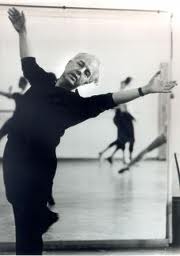 |
| Another pupil Kurt Jooss |
Born as Rudolf von Laban, he is more commonly known as just Rudolf Laban. He was born in Bratislava, Czechoslovakia, once part of the Austro-Hungarian Empire in 1879. Laban's father was a leader in the military and was expected to follow in his father's footsteps. His family traveled across Europe for his father where he saw the folk dances of Yugoslavia, Turkey, Germany, and ballroom of Vienna. Laban thought everyone should dance. He loved working with amateurs and ordinary workers who would ordinarily never even think to dance. Laban was always learning. He was an established dancer, choreographer, actor, painter, designer, crystallographer, topologist, architect, pianist, and composer. After experimenting with new dance forms, mime, and musical composition he decided to devote his life to dance. Born a teacher, he opened his first summer school, with apprentice teacher assistants in Switzerland. The school included dance, singing, music, and painting. Amongst these pupils was Mary Wigman whom he collaborated with many times. His finest dancers consisted of French and Germans who once worked together, ended up killing each other during the war. He opened a school in Stuttgart where Kurt Jooss, later of Ballet Jooss, became a pupil. Other countries typically had amateurs perform with professional soloist. Laban decided he wanted to organize movement choirs that moved taking the lead from professionals in performance. He found communal “dance farm” in Switzerland. Through this he discovered that his dramas, songs, and spoken word did not belong to drama or opera but to the world of dance. Kurt Jooss fled Germany to England. Later Laban reunited with him and Lisa Ullmann, one of his former students and Jooss’s assistant. For Olympics games in Berlin in 1936, Laban created a dance involving thousands of participants. Hitler and Goebels decided to attend the dress rehearsal. They felt threatened by the fact that Laban could get a huge mass of people to move together and that there could not be two masters in Germany. The performance was immediately cancelled and Laban then became exhausted and ill. He was put on unofficial house arrest. His notation was forbidden to be used, name could not be mentioned in school or in books. He fled the country to Paris. After living with Jooss, he lived with two rich philanthropists, Leonard and Dorothy Elmhirst, and was giving his own quarters. They encouraged him to working on his theories and to write his masterly book, Choreutics. Laban was not allowed to work in England because of the war. He and Lisa Ullmann moved inland to avoid allowed the enemy to find him. She later smuggled his paper out of Germany and avoided detection. During the Blitz, bombing in London, many people fled London leaving a place for Laban and Ullmann to live. With influences from the Elmhirst’s they were given work permits. Later the could begin to give class and they soon attracted the attention of physical educationalists and dance teachers. Eventually courses were arranged and lectures were given, mostly relying on Ullmann due to Laban’s health. Through his work observations could be made about ordinary working. Solving problems for women who take on the heavy workload of men. His collaboration with Lawerence resulted in the booklet, Laban/Lawrence Industrial Rhythm. This was used to revolutionise the future work in industry and agriculture. Physical educationalists and dance teacher sought to fit Laban in their schedules. The war was at its worse but he and Ullman were invited to teach and give lectures as Modern Dance courses. This established Modern Educationl Dance in Britain. Ullmann and Laban now live in a large house in Manchester and began giving informal classes in their basement. Beginning at four students and the numbers increased. From this the Art of Movement Studio emerged. At the same time Laban-based dance groups were being formed many parts of Britain. Soon the studio grew too big for their basement and they moved it to a rural place in Addlestone, Surrey. Donated by the Elmhirsts’ son, William who was a student. He now had a faculty of assistants led by Ullmann. This was a pleasant place for him to spend his final years. He died in Weybridge, England in 1958. His work undoubtedly would be carried on by his pupils and assistants. His philosophy was based on the belief that the human body and mind are one and inseparably fused. Many people are influenced by Laban and do not even realize it. He gave us terms such as stance, the dimensional cross, pathways and traces forms, and monolinear and polylinear movements. Also he gave us the effort factors and the dimensional scales. His dance notation system was established in 1927. Albrecht Knust and Ann Hutchinson made Laban’s system eminently practical and is now use in much of today’s master contemporary dance. He wrote many books and articles such as The Language of Movement, Rudolf Laban Speaks about Movement and Dance, The Mastery of Movement, A Vision of Dynamic Space, and Modern Educational Dance. These carry on his legacy in which we all learn from and apply to our own studies. Without Laban much of the language and notation would not exist.
